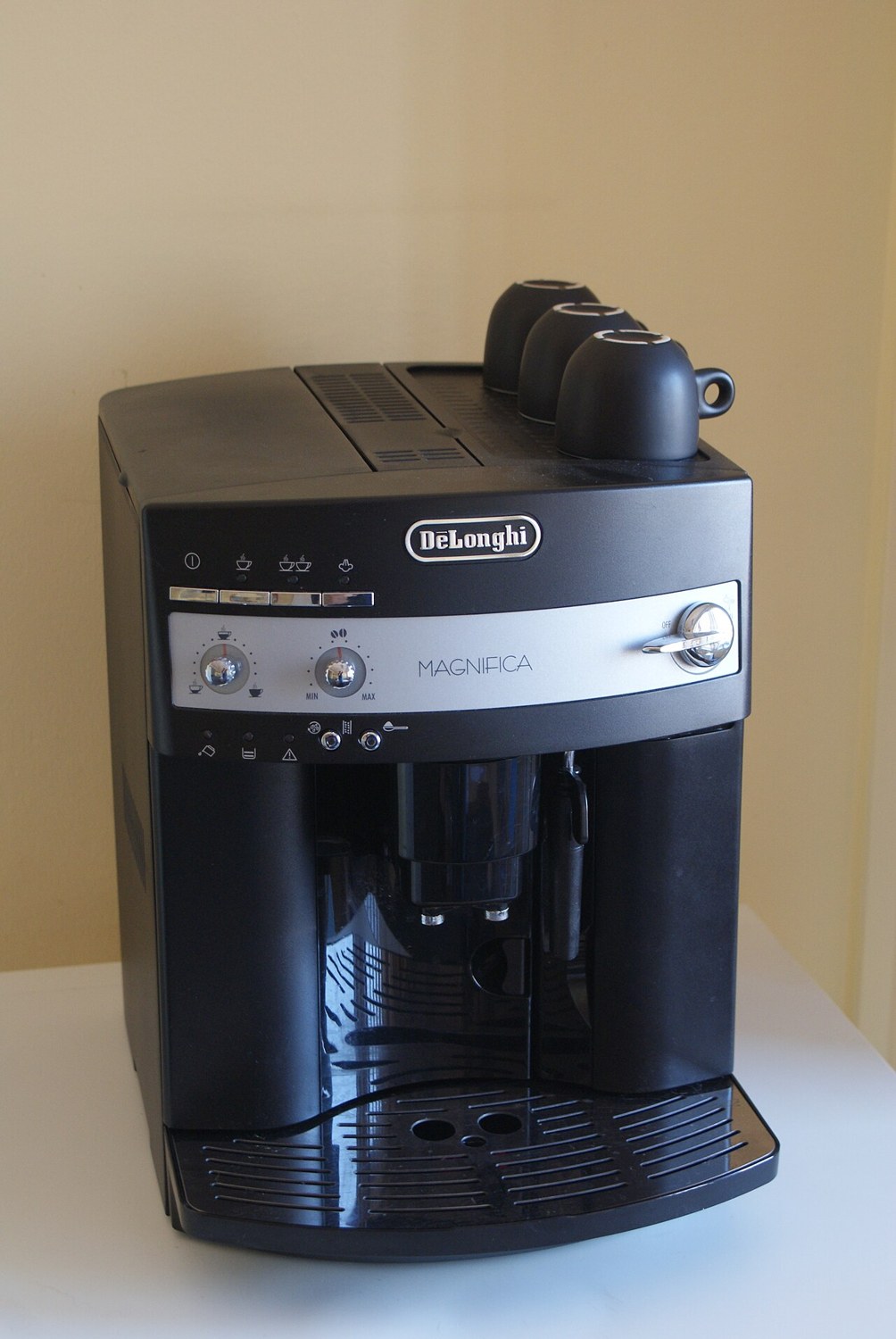
An automatic coffee machine showing wear may have been cared for well, while a pristine exterior can conceal difficult-to-reach residue. Ask how the specific model was cleaned and what maintenance it requires. Designs differ: not every brewing unit is intended for removal by the owner, so assess the care process that actually applies.
Inspect containers and accessible brewing areas
Have the drip tray, grounds container and water tank removed as directed. Look for visible cracks, broken catches and deposits in concealed corners. A damaged small container can make daily use awkward even when the machine still produces coffee. Include replacement in the cost assessment.
For an owner-removable brewing group, the intended maintenance process should work normally. Philips describes rinsing, drying and suitable lubrication for relevant models. Do not apply those steps to fixed systems. Never force out a stuck unit or open the cabinet to make it accessible.
Separate milk cleaning from descaling
If milk drinks matter to you, check that hoses, container, frother and small connectors are complete. Ask about cleaning after milk use. An automatic rinse covers only the measures the instructions say it covers. Fragrance products do not remove hidden deposits.
Descaling addresses different deposits from coffee oils or milk residue. A claim that descaling was recently completed therefore leaves other hygiene questions unanswered. Ask which maintenance was performed and which products were used, without treating a missing receipt as proof of a defect.
Use a demonstration purposefully
Observe an intended rinse and drink-making cycle with all parts correctly fitted. Watch for water escaping outside intended paths, error messages and how the tray is handled. Taste also depends on beans and settings; an unexpected flavour is not a reliable diagnosis of grinder condition.
Establish access to consumables and servicing for that version. Filters, seals and milk-system components can alter total costs. Do not force further hot-drink trials when a leak or electrical damage remains unexplained. Documented maintenance is useful evidence but does not guarantee a particular remaining service life.
Common questions
Do coffee traces definitely show neglect?
Not every trace is unusual. Amount, position and overall care matter. Philips notes that small quantities of powder can occur in the brewing area of some models; that cannot be generalised to every condition.
Is a removable brewing unit always better?
It permits particular owner maintenance but also requires it. What matters is a care routine you can follow and an understandable condition history for the actual machine.