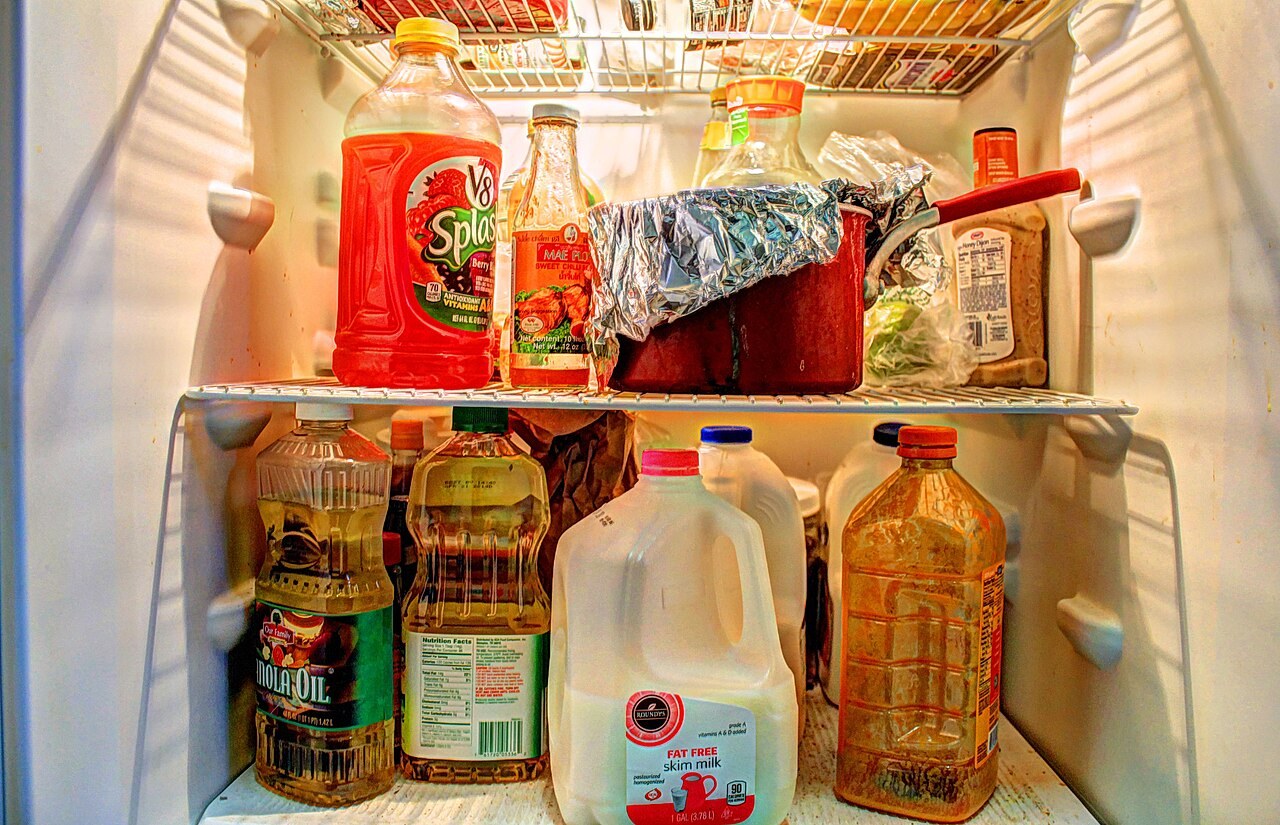
A used refrigerator needs more than a clean interior. Seals, removable components and intended airflow matter too. A planned sequence prevents food being overlooked while a longer cleaning task is underway.
Prepare before emptying the appliance
Read the care instructions for the exact model and arrange suitable temporary food storage. Switch off as directed. Remove movable components carefully and remember their positions. Avoid exposing cold glass to sudden temperature changes without checking the instructions. Whether shelves or containers can go into a dishwasher depends on the manual; removable does not automatically mean dishwasher-safe. Set fragile pieces down securely rather than stacking them on a slippery edge. While emptying, look for broken supports or cracks. These are different problems from ordinary dirt and will not disappear because the cleaning becomes more intensive or uses a stronger chemical.
Treat the interior and seal deliberately
Use an appropriate soft cloth and products permitted for the model. Keep water away from lighting, controls and electrical openings. Follow the specific care guidance for the door seal and dry it afterwards. Do not pull a seal out merely because another model range has removable seals. Check folds and contact surfaces for residue without using sharp tools. A loose or damaged seal needs suitable assessment or replacement. Clean only intended accessible drains according to the instructions. Do not push arbitrary tools deep into openings whose construction is unknown. Aggressive treatment can create more problems than it resolves.
Check airflow and return to operation
Inspect intended ventilation areas and maintain the required clearances. Remove accessible dust only by the permitted method, without opening protective covers. Work on the refrigeration circuit is not routine household care. Refit dry components correctly and restart according to the manual. Return food only under suitable storage conditions. Observe whether doors close freely and shelves sit properly. If moisture, smell or another issue remains, describe its location and timing for support. A clean surface does not establish correct cooling performance. When there is doubt, function and temperature control require separate assessment rather than an assumption based on appearance.
Common questions
Can every seal be pulled out?
No. Designs differ. Remove it only when the manual provides for that procedure; otherwise the attachment may be damaged during the attempt.
Will cleaning solve poor cooling?
Not necessarily. Dirt is only one possible influence. Follow the intended operating guidance and arrange assessment if abnormal behaviour remains afterwards.