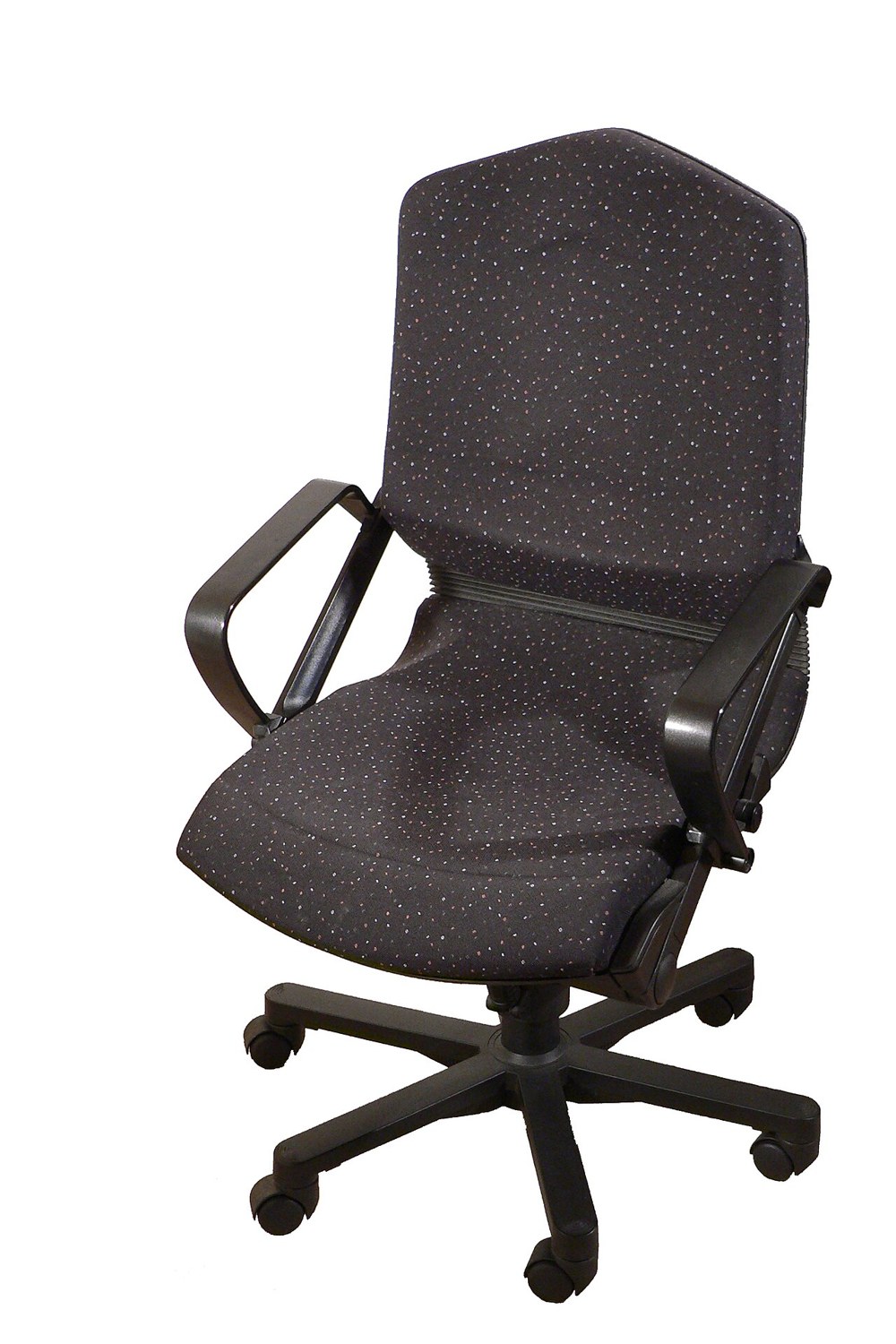
A used office chair deserves a personal sitting trial using its actual adjustments. The same model may be offered with different arms, back supports or mechanisms. Identify the version and compare it with the appropriate instructions. A photograph reveals only part of the fitted functionality, and a familiar appearance should not replace checking the controls.
Start with the base and seat
Place the chair on a suitable level floor. Inspect the base and castor sockets externally for cracks or missing parts. Castors intended for a particular flooring type should also suit your future workplace. Rough rolling may relate to dirt or the floor, but remains an observation to record.
Look around accessible seat edges and examine fabric, mesh or padding. Cracked structural mountings matter differently from worn cloth. Check that armpads are secure too. Do not conduct a loaded sitting trial on a chair with an obviously damaged base.
Use each fitted adjustment
Have height, seat depth, arm position and back mechanism adjusted as directed. Not every chair offers every function. Herman Miller accordingly provides separate adjustment guides for different chairs and versions. Do not force an unidentified lever into a guessed position.
Sit in the intended position for a while and observe whether height or locking gives way unexpectedly. A short trial may expose abnormal behaviour but cannot guarantee long-term ergonomic suitability. Compare the available seat range with your desk height and normal working position.
Assess parts and refurbishment
Ask which components were replaced and whether matching castors, armpads or covers are available. A refurbished chair’s description should name the work performed. Cleaned upholstery and a renewed mechanism are different interventions. Shiny surfaces do not establish technical refurbishment.
Do not open gas lifts or other preloaded assemblies during a purchase inspection. Sinking or unusual play needs model-specific assessment and possibly competent replacement. Include cleaning and transport too. A somewhat more expensive chair with complete working adjustments may be more practical than a cheap one with uncertain mechanics.
Common questions
Does creaking definitely mean a fault?
No. Material contact, loose parts or design can produce noise. A newly pronounced noise together with movement still deserves investigation.
Can I fit any gas lift?
Fit, travel and permitted combination must be correct. Establish the suitable replacement and safe fitting procedure for the particular chair.